Pagine

lunedì 11 aprile 2011

Lucia Canu: interview to a painter who presents brush-strokes of sea.


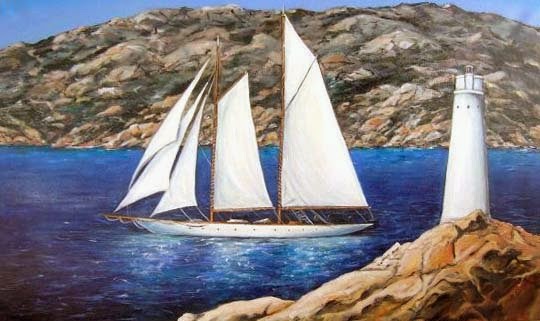
I go up a little street of the little town of Sant'Antonio di Gallura where one of the many festivals which gladden dwellers and lucky visitors' summer nights takes place in the wonderful Sardinia. There are little stands with honey, hand-made forniture, knives with horn grips and foulards to light up my suntan. But going up, I glimpse a stand with something hungwhich seems like what I have already see in the last days: the sea. I've never seen such a realistic representation of the sea, the transparency of Sardinia's sea water in that picture made by an experienced hand... I imagine he should be an old artist who sees and represents that enchanted places from years, so I get near the only person who could give me informations. I ask myself if she is the artist's daughter or niece and Lucia presents herself as the author of the pictures! I'm astonished and I convince myself to interview her to introduce her to you.

Lucia Canu

Lucia was born in Sassari in 1978. She lives and works in her painter's studio in Sant'Antonio di Gallura, a little centre in the heart of Gallura. In 2006 she conferred a degree on Art School in Sassari with a qualifying course on decoration. Since 2000, she started with her first exhibitions, introducing herself in the territory, above all with summer shows in the splendid  Costa Smeralda's setting. In 2007, she lived the experience of the social services on U.N.I.T.A.L.S.I., a voluntary association for disabled people where she assisted elderly people and realized a painting course for Down's syndrome kids in her town. in 2008 she organized a painting laboratory called "Giocare con l'arte" (Play with art) for primary school's children in the social centre of the town Arzachena (OT). On June 2009 she exposed her pictures on Spazio Terzo Mondo's bookshop in Seriate(BG). The title of the exhibition was "La danza dell'acqua" (The dance of the water) and on August she attended a painting course on the Summer Academy in Salzburg ( Austria) where there were important lessons from international great artists. on September she won the 2° prize to the painting competition of "Sennoriart" association in Sennori (SS). On 2010 she partecipated to painting and art-therapy lab named "Lavori d'arte in corso" (Art works in progress) for disabled young people of U.M.U.S. association in Arzachena.
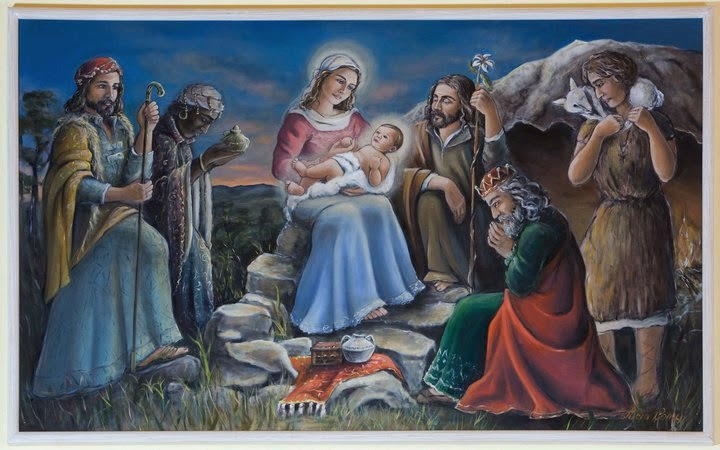
In the same year, she finished 5 important paintings for the church of her town. They are works which represent Jesus and other Saints' life scenes. These paintings have concluded and defined the new look of the interior of the church, recently renovated. Lucia Canu is mainly a figurative artist and being a lover of the colours of her territory, she made them a constant element for the most parts of her works.
Her interpretation of the crystal-clear Costa Smeralda's sea water , with time, became her unmistakable trademark.
Her compositions deals with her land, its landscape, foreshortenings, characters and still life and they were represented in simple way but with a strong light to increase contrasts and show the subject with an explosion of colours.


Interview

What is for you painting?
I consider it a state of mind which goes beyond the simple representation. When I start a painting, I pull totally ahead from everything. I don't care about people judgements as regards technique or verisimilitude, my mission is the ability to transmit an emotion. The sense of wellbeing derived from being able to transmit a little emotion to others, it's priceless.


Are you inspired from an artistic movement or an artist in particular?
One of the first artists I've copied was Vincent Van Gogh. What attracted my attention were chromatic impact, vehemence on the use of colours in the cloth and anxiety. Untill now ,I had any occasion to see one of his pictures closely but I'm sure that I'd suffer from Stendhal's syndrome!
Other key character was Monet and his serial pictures of ponds with water lilies. I love everything which reflected in the water and my thesis was all marked on this important element.


Have you, like Van Gogh, a little bit of insanity?
No, I haven't. I'm a very calm person and also during my work I must have my mind free from thoughts.

So, do you need to isolate youself from the world when you hold the paintbrush in your hand? No viewers?
In my studio, I'm always alone because, if I speak with someone, I lose my concentration or mood. On the contrary, on occasions like exhibitions, I like to listen to remarks and comments and talk.


From your pictures, I deduce your love for your land. Do you paint landscapes remembering or observing them?
The most part of times, it's photographic memory, even though I always bring with me my camera but I never painted a landscape identical to the photo.


What was your first picture and what feeling do you remember?
(She thinks a little bit...) Maybe a sunset, a dark sunset together with a view of the country... and maybe it was that occasion to bring me to the uninterrupted search of light! (She laugh) It could be the reason why I have this name! It's difficult to explain but it's impossible I could represent some landscape with a leaden sky or a stormy sea. I hope it will be of good omen for my state of mind!


Have you a favourite work in your collection?
I am proud of my simple composition named "Plangton" made in the Art School. It is my starting point and my pride. My satisfaction derives also from the fact that I built the cloth by myself (150 X 150 cm), setting up this dance of micro-organisms.


How many time do you dedicate to your job?
About 4 hours in the morning and 4 hours in the evening...


Is your job of painter only a job or a passion?
Till today, I'm glad it's my main occupation. Fortunately ,I work for private sector and for those who appreciate my works. Up to last year, I made painting labs for disable young people, an experience which I would like to make again as soon as possible. But in my studio I have a lot of space to be able to organize some coloured and happy courses for children!


Are you a person who dedicate many time for social works? Where did this experience start from?
Many years ago, I had the chance to be involved in summer camps here, in Costa Smeralda, with the U.N.I.T.A.L.S.I. association which, every year, attends the sick on their journey to Lourdes. Thanks to this association, I made social services, so I exploited what I was able to do and my art working with kids suffering from Down's syndrome of my town.


What kind of techniques do you use?
I mainly use oil colours for classic works but also compositions of acrylic colours and other mixed techniques.

Who or what urged you to take up painting?
It's a family vice! My parents met eachother in art high school. They have always taught art and worked together with painting and ceramics. At the beginning , I thought to become a woman of letters but, in the end, my Dna won and, as soon as I got in Art School, I immediately felt at home!


What do you feel while you paint?
It's a peace and estrangement feeling but sometimes I feel a bit disappointed because the result is not that hoped. It's always a continuous challenge between the brush and me!


Why did you devote yourself to religious subjects?
It was a very important work commissioned by the church of my town that, after having restored the interior, thought to complete it with a pictorial representation of Jesus' life. I must study very much the compositions, paying attention to symbology, to render unique and original all the works.


They are very big pictures, what kind of problems did you face up to realize them?
Yes, they are cloths with nearly life-size images. Given that they should be positioned on the top of the church, I directed my attention on perspective and some particulars that , maybe from afar, would be lost. I spent almost a month to realize just one of them!


If you think of you within 10 years, what do you see?
I see myself always at work with a good circle in art market and the possibility that my name and my works shuold be appreciated even out of my land. I don't have great expectations to become too much famous, even though it should be not so bad to see one of my pictures in the "Biennale" in Venice.


What do you suggest to whom wants to take up your same carrier?
What I always say to the children that ask me the same question: it's a luck to be able to trasnform a big passion into job. It's priceless when you see that one of your pictures transmits emotions to others, and even if it is not a simple occupation which it often don't give so much certainties, if you make it with passion, you will able to overcome everything!


This cheerful interview made on-line with Lucia, makes me happy. We have so much fun and she answers to my shower of questions with peerless charm. It's a pleasure to know her both as artist and as person. Her love for painting and children overcomes me, thus, I decide to introduce to you also her "jointly deeds" on my future posts and, who knows? , maybe I could have , among new posts, some new acquaintances and a new section!
Meanwhile, there is nothing left to do but wish you good luck, Lucia!

Sonia.

Translation by Denise Cinquerrui.


Contact:

site: http://www.luciacanu.com/
facebook: Lucia Canu
mail: cilla.canu@tiscali.it
phone: +39 349 5364 743

lunedì 4 aprile 2011

Lucia Canu: intervista alla pittrice che regala pennellate di mare


Risalgo una stradina del piccolo paesino di Sant’Antonio di Gallura dove si svolge una delle tante sagre che rallegrano le serate estive degli abitanti e dei fortunati visitatori che come me, decidono di trascorrere l’estate nella splendida Sardegna. Ci sono dei piccoli stand che mi propongono miele, mobili lavorati a mano, coltelli con il manico in corno e foulard per ravvivare la mia già luminosa abbronzatura. Ma salendo più su, intravedo uno stand con appeso qualcosa che avevo già visto nei giorni scorsi: il mare. Non avevo mai visto una rappresentazione così realistica del mare, la trasparenza delle acque della Sardegna impresse in un quadro da una mano esperta. Immagino sia un vecchio artista che da anni vede e rappresenta quei luoghi incantati, così mi avvicino all’unica persona che può darmi delle informazioni. Mi domando se sia la figlia o la nipote dell'autore e mi si presenta Lucia, dicendomi che è l’autrice dei quadri! Rimango felicemente  sorpresa vedendo una ragazza così giovane e così piena di talento e non posso esimermi dal pubblicare un post tutto per lei. Vi propongo questa intervista che sono orgogliosa di presentarvi.


Lucia Canu 
Lucia nasce a Sassari nel 1978. Vive e lavora nel suo studio di pittura a Sant’Antonio di Gallura, piccolo centro nel cuore della Gallura. Nel 2006 consegue la Laurea presso l’Accademia di belle Arti a Sassari con specializzazione in Decorazione.
Dal 2000 iniziano le sue prime esposizioni e collettive, facendosi conoscere nel suo territorio, soprattutto con esposizioni estive nella splendida cornice della Costa Smeralda.
Nel 2007 vive l’esperienza del Servizio Civile presso l’U.N.I.T.A.L.S.I., l'associazione di volontariato per disabili e presta il suo aiuto sia per l'assistenza ai malati, sia per realizzare un corso di pittura per ragazzi con la Sindrome di Down, nel suo paese.
Nel 2008 organizza un laboratorio di pittura “Giocare con l’arte!” rivolto ai bambini delle scuole primarie, nei locali del centro sociale ad Arzachena (OT).
Nel Giugno del 2009 espone i suoi dipinti alla libreria Spazio Terzo Mondo a Seriate (BG) con la mostra dal titolo “ La danza dell’Acqua”, e ad Agosto segue un corso di pittura presso la SUMMER ACADEMY a Salisburgo in Austria seguendo le lezioni di importanti artisti di calibro internazionale.
A Settembre vince il 2° premio al concorso di pittura dell’associazione “SENNORIART” nel comune di Sennori (SS).
NEL 2010 partecipa al laboratorio di pittura e arte-terapia dal titolo “ Lavori d’arte in corso” per giovani disabili dell’associazione U.M.U.S di Arzachena.
Sempre in quest’anno porta a termine 5 importanti quadri destinati alla chiesa del suo paese Sant’Antonio di Gallura.
Si tratta di opere raffiguranti scene della vita di Gesù ed altri santi. I dipinti hanno così completato e definito il nuovo aspetto dell’interno della chiesa, recentemente rinnovata.
Lucia Canu è un’artista prevalentemente figurativa ed essendo amante dei colori della sua terra ne ha fatto elemento costante per la maggior parte delle sue rappresentazioni.
La sua interpretazione dell’acqua cristallina del mare della Costa Smeralda è divenuto nel tempo un suo inconfondibile "marchio di fabbrica".
Le sue composizioni che raccontano la sua terra, paesaggi, scorci, personaggi e nature morte, vengono rappresentati in modo semplice ma spesso investiti da una luce forte per aumentare i contrasti e mostrare il soggetto nella sua massima esplosione di colori.


Intervista


Cos'è per te la pittura?
La considero uno stato d'animo che va al di là della semplice rappresentazione. Quando inizio un dipinto riesco a staccarmi completamente da ciò che mi circonda. Non mi importa dei giudizi della nei confronti della tecnica o della verosomiglianza, la mia missione è il poter trasmettere un'emozione. Lo stato di benessere che mi porta il vedere che anche negli altri ho trasmesso un pizzico di emozione, è impagabile.

Sei ispirata da una corrente artistica o da un artista in particolare?
Uno dei primi che ho copiato è stato Vincent Van Gogh, mi attraeva l'impatto cromatico, il gesto d'impeto con cui riversava colori e colori sulla tela, l'inquietudine. Non ho ancora avuto l'occasione di veder un suo quadro da vicino ma son sicura che soffrirei della Sindrome di Stendhal!
Altro punto di riferimento è Monet e i dipinti seriali dello stagno con le ninfee. Adoro tutto ciò che si riflette nell'acqua, la mia tesi era tutta improntata su questo importantissimo elemento.

Anche tu come Van Gogh hai un pizzico di pazzia?
No, sono una persona molto pacata e anche durante il lavoro devo aver la mente libera da pensieri.

Quindi hai bisogno di isolarti dal mondo quando tieni il pennello in mano? Nessuno spettatore?
Nel mio studio sono sempre da sola perchè se mi perdo in chiacchere poi perdo la concentrazione o la voglia. Mentre, in occasioni tipo estemporanee o mostre, dove lavoro all'esterno, adoro sentire i commenti e fermarmi a chiaccherare.

Dai tuoi quadri si evince l’amore per la tua terra. Dipingi i paesaggi ricordandoli o dal vivo?
La maggior parte delle volte è memoria fotografica, anche se porto sempre con me la mia digitale per gli angolini e gli scorci da ricordare. Ma lungi da me riprodurre un paesaggio identico alla foto!

Qual è stato il tuo primo quadro e che emozioni ricordi?
(ci pensa un pò su) forse un tramonto, un accenno di campagna ed un tramonto scuro... e forse da li è scattato qualcosa che mi ha portato alla continua ricerca della luce! (ride) Forse questa cosa è insita nel mio nome! Non so come spiegartelo, è difficile che possa rappresentare qualche paesaggio con cielo plumbeo o mare in tempesta. Spero che sia di buon auspicio per il mio stato d'animo!

Hai una tua opera che prediligi?Vado fiera di una mia semplice composizione che si chiama Plangton fatto in Accademia. Mio orgoglio e punto di partenza con tanto entusiasmo per il mio lavoro. Una bella botta di colore! Ma la mia soddisfazione nasce anche dal fatto che mi sono costruita da sola la tela (150 cm X 150 cm), dando vita a questa danza di microorganismi.

Quanto tempo dedichi alla tua arte?
Circa quatro ore la mattina e quatro la sera quando tengo un buon ritmo.

Quello della pittrice è il tuo unico lavoro oppure è una passione che vorresti diventasse tale?
Oggi come oggi son felice che sia la mia principale occupazione. Per fortuna lavoro per privati e per chi da sempre apprezza i miei lavori e mi cerca. Faccio un pò di tutto, fino allo scorso anno, ho fatto laboratori di pittura per ragazzi disabili, un'esperienza che spero di ripetere presto. Ma nel mio studio ho tanto spazio per ospitare anche dei bimbi e sto lavorando per poter organizzare dei corsi allegri e colorati per i bimbi!

Sei una persona che si dedica molto al sociale? Da dove è partita quest'esperienza?
Molti anni fa ho avuto la possibilità di fare delle colonie estive per disabili qua in costa Smeralda con l'associazione U.N.I.T.A.L.S.I. che accompagna ogni anno gli ammalati nei viaggi a Lourdes. Grazie a questa associazione ho fatto il servizio civile, così ho sfruttato ciò che sapevo fare e la mia arte, lavorando con i ragazzi down del mio paese.

Quali tecniche usi?
Principalmente colori ad olio per le opere più classiche, oltre a composizioni con colori aclrilici e ad altre tecniche miste.

Chi o cosa ti ha spinto verso la pittura?
E' un vizio di famiglia! I miei genitori si sono conosciuti all'istituto d'arte. Hanno sempre insegnato educazione artistica ed hanno sempre lavoro di squadra con pittura e ceramica. All'inizio io stavo intraprendendo strade diverse, pensavo di diventare maestra di lettere. Ma il dna alla fine ha vinto e, appena entrata in accademia, mi son sentita finalmente a casa!

Cosa provi quando dipingi?
E' una sensazione di pace ed estraniamento, spesso di grande entusiasmo ma il più delle volte provo un pò di delusione se il risultato non è quello voluto. E' sempre una continua sfida tra me e il pennello!

Come mai ti sei dedicata a soggetti religiosi?
E' stato un importantissimo lavoro commissinato dalla parrocchia del mio paese che in seguito alle recenti ristrutturazioni effettuate all'interno ha pensato di completare tutto con una rappresentazione pittorica della vita di Gesù. Ho dovuto studiare bene le composizioni facendo attenzione alla simbologia per rendere i lavori unici e originali.

Sono dei quadri molto grandi, che problemi hai riscontrato nella realizzazione? Si, sono tele con immagini a grandezza quasi naturale. Visto che sarebbero stati posizionati in alto, ha richiesto maggior attenzione per la prospettiva e per alcuni particolari che magari da lontano potevano perdersi. Ho impiegato quasi un mese per realizzare un solo quadro!

Se pensi a te fra 10 anni, cosa vedi?
Mi vedo sempre all'opera con un buon giro nel mercato dell'arte e con la possibilità che il mio nome e le mie opere vengano apprezzate anche oltre la mia isola. Non ho grandi pretese di diventare famosissima anche se vedere esposto un mio dipinto alla Biennale di Venezia non sarebbe male!

Cosa consiglieresti a chi vuole intraprendere la tua stessa strada?
Quello che dico anche ai bambini che mi fanno spesso questa domanda: è una fortuna trasformare una grande passione in lavoro. Non ha prezzo quando vedi che un tuo quadro riesce a far emozionare qualcuno e anche se non è un mestiere semplice e spesso non ti dà tante sicurezze, se lo fai con passione riesci a superare tutto!

Questa allegra intervista fatta online a Lucia, mi ha resa felice. Ci siamo divertite molto e lei ha resistito alla mia tempesta di domande con una simpatia ineguagliabile. Vale la pena conoscerla sia come artista, sia come persona. Il suo amore per la pittura e per i bambini mi ha travolta, così ho deciso che vi farò conoscere le sue "gesta solidali" nel corso dei miei prossimi post e chissà, magari avremo tra i nuovi post qualche nuova conoscenza e una nuova sezione!
Intanto non mi resta che augurarti Buona Fortuna Lucia.

Sonia.


Potete contattare Lucia Canu tramite:
sito: http://www.luciacanu.com/
facebook: Lucia Canu
mail: cilla.canu@tiscali.it
phone: +39 349 5364 743


mercoledì 23 marzo 2011

Camilla Pistolesi: interview to a goldsmith-naturalist


Silver strings coiled like climbing plants on coulored gems, geometrical drawings that included, besides their simplicity, the beauty of a jewel which reminds me the Egiptian handycraft but in our time.
The first time I saw Camilla's jewels, they were laid on cobblestones, as they come up from a riverbed. Thus, I decided to visit the "Art" in Florence to meet this young jewel designer with a strong and determined behaviour and crazy about her job. She deserved all my admiration and I have the honour to introduce her to all of you.

Camilla Pistolesi
 
Camilla was born in Florence in 1978. Even though she has been endowed by nature with excellent ability and love for drawing and Arts, her studies, a little bit forced by her parents, were classics until the achievement of psycology degree on February 2003. During the post-degree apprenticeship, the fracture of a leg (November 2004) also entiled the breaking of a route which she didn't feel inside no more, converting her manual and creative talents into professional activity. At first, she devoted herself to the realization of lamps with ecologic papers and recycling materials, (July 2005), then, on Jenuary 2006, she decided to keep going a family tradition on precious metals: as the matter of fact, her mother was the owner of a goldsmith handicraft company established from her grandfather on postwar period; her father was a goldsmith for over 40 years and today he's retired. Thus, she started to work side by side with her father who taught her the basic techniques. That work aroused her interest very much and it gave to her the chance to express her creativity. On June 2008, she attended a 300 hour course which conferred a certificate of professional specialization on gemmology and setting (December 2008). There, she had the opportunity to meet many people envolved on goldsmith's art and see a different possibility of application of jewels. Thanks to that school's contacts, she discovered international competitions, so, she partecipated to the modern jewelry competition at the Art Gallery on Legnica (Poland):
The 19th International Silverart Competition "MINIMUM" on March 2010 and now she's ready to partecipate at the 2011 edition with the title "SEXY".
From the desire and the need of a further development of her activity, on Jenuary 2010, she opened an individual company. She sold her creations on selected handicraft markets and partecipated to the "Mostra internazionale dell'artigianato" (International handicraft exhibition) , which took place every year inside Da Basso's Fortress "ART2010" and it's composed from research and design handicraft.

On her route as jewel designer and maker, she was interested in jewelry ethic aspects and in environmental damages derived from the use of these products. For these reasons, another key points of her activity were the tenability and the respect for Nature through the realization of products with recycled materials and techniques which don't use or use in minimum quantities chemical products.

INTERVIEW

What inspires you when you make a jewel?

In my jewel production, I have a romantic side, inspired by Nature, and a geometrical side. In both cases, my ideas are instinctive and they materialize little by little during the productive project.Thus , in some cases, it's the direct manipulation of metal that brings me to the instantaneous execution of an object, the thought born and takes form on workbench or through a route which from the drawing comes to the realization. The common denominators are semplicity and balance of the form.

What is the procedure to carry out a jewel?
The procedure is very simple. The idea, drawn or thought, is the starting point. Then, it's me sat in my workbench and... voilà! Generally, manual manifacturing starts from semifinished products, that is thread and sheets, worked by various techniques (tracery, welding, embossing and chisel). Only if necessary, I start from metal fusion. When the object is finished, it must be polished. The trimming is very important because it gives to the object delicacy and quality.

What kind of materials do you use and why?
The metal I use is almost exclusive Silver. In some cases, I couple it with bronze or copper and brass. I choose silver because of the utilization of a noble metal which, somehow, increases my own work and also because of the facility to find it, given that my mother was the owner of a silversmith's.

How much do you learn from your studies and how much from your father?
Even though studies were a very important experience, for sure, in my work, my father's experience was fundamental as well as home environment devoted to Art was a key point, and particularly my grandfather (a painter) who, in some way, handed down to me this bent on beauty.

What kind of jewel do you like to realize?
I love bracelets and necklaces, even if, being more expensive objects, they are the ones I sell less!

Are you inspired by some designer?
I must confess I don't know any designer...nor I'm informed about fashion and stuff like that... the only magazines I occasionally turn over the pages are "D di Repubblica" and "Elle Decor", to which my brother is subscribed. At home I have neither television nor computer and I prefer to stay in the open air, actually I live in the country, or read.

Did your studies in psicology help you in this work?
I'd say not so much, moreover, they haven't changed my reservedness, so, it made me not very prone to public relations, marketing or strategy of sale. But this rends me very honest!!

You exhibited your works at "ART2010" and also this year you'll take part on it. How was this experience?
It was a very important and formative experience for what concern the presentation of my works. After having overcome the initial shock from a rude works manager (a qualified architect), me, a person who, before this, has only exhibited in little markets, I have learnt to accept and welcome all her advices and this helped me very much to improve my habitual exposition.

I read you take a turn in many Tuscany little markets, is it a good way to introduce yourself? and do you like this way to exhibite?
I should say that I like it because it's a point of contacts with great craftsmen and good friends. But I should also say it's too strenuous. For this, I'd like to have got a workshop that looks like a point of sale.

Would you like to open a shop, entirely yours, to exhibite your creations?
I'd like a workshop with a shop-window. For this goal I must say that I'm on halfway: I've just known to be admitted on the list for the grant of a place inside "SPAZIOSAM" in Florence, that is an old and restored ex-monastery where the municipality are assigned workshops for some craftsmen.

Did you ever export or just think to export your art in foreign countries?
I'd like it so much, but even though I'm an enterpreneur, I don't feel it inside. I feel to be a simple craftswoman, certainly more creative then a common craftsman but I'm always alone on making all the works this job needs like: see to the exposition; photograph objects and retouch them; create graphics for the future website, etc. So, I'm too tired for these collateral works that I've no possibility to do or just to think it.

You are an enterpreneur, do State or Region help young people like you to introduce themselves and to work on one's own?
Unfortunately, I didn't find any sort of help from State and Region. It exists in Florence a counter called "incubatore" theorically put in charge of helping the birth of new companies but it did not give to me no help at all! I'd say, I was disappointed.

Given your love for observance of Nature, how would you like to be your art?
I'd like to realize entirely moral and ecological objects and transmit these values to people. For this, I must still work! It's not easy to preview how the future of italian economic setting will be.

What are your fears and hopes for the future of your job?
Fears are enormous and every year I have my crisis period: I ask myself if it isn't worth it... the point is that I'm not able to imagine a different working life and after all, I'm a dreamer, I can't give up!

Did you ever have some strange requests of personalized objects?
I received many requests of personalized objects, but not so strange! Indeed, the good thing is that when someone asks me objects on commission, they trust to my taste and they give me only indefinite instructions.

How do you overcome crisis moments and who helps you?
Till now, I never had creative crisis. I have three notebooks where I note down ideas with some sketches. For now, I've never been able to realize them all!

What do you suggest to who wants to enter upon your same way?
You need too much passion and courage!!


If you go round markets and you find a nice girl with wonderful jewels, stop and admire how Art and Nature together could enrapture your mind. You don't regret my advice.

Good luck, Camilla.
Sonia.

Translation by Denise Cinquerrui.


Contact:
e-mail: kamillaps@yahoo.com

facebook: Gioielli di Camilla